


Call us now
07971549107

 Send Inquiry
Rotary Encoder 3 Pin
Price 26000.0 INR/ Piece
Rotary Encoder 3 Pin Specification
- Shape
- Cylindrical
- Efficiency
- High for signal transmission
- Feature
- Push Button Function, 360 Rotation, Detent Option
- Connector Type
- 3 Pin PCB
- Overheating Protection
- NO
- Surface Finish
- Nickel Plated
- Insulation Material
- Plastic
- Mounting Type
- Panel Mount
- IP Rating
- Not Rated
- Humidity %
- 95%
- Operating Temperature
- -20C to +70C
- Product Type
- Rotary Encoder
- Application
- Position and direction detection, Arduino/Raspberry Pi Projects
- Protection Level
- Standard
- Frequency (MHz)
- DC Only
- Rated Voltage
- 5V DC
- Energy Consumption
- Low
- Output Type
- Digital
- Color
- Silver and Blue
- Dimension (L*W*H)
- 20mm x 12mm x 15mm
- Weight
- 10 grams
- Input Voltage
- 5V DC
- Size
- Shaft Length 20mm, Diameter 6mm
- Phase
- Single Phase
- Connection Type
- Pin-insertion
- No Of Poles
- 3
- Material
- Metal and Plastic
- Switch Type
- Momentary Push Button
- RoHS Compliant
- Yes
- Max Shaft Load
- 1.5 kgf
- Insulation Resistance
- >=100M at 500V DC
- Torque
- 0.1-0.5 Ncm
- Operating Life
- Up to 30,000 cycles
- Resolution
- 20 pulses per revolution (PPR)
- Detent
- Yes, tactile feedback
- Contact Resistance
- 100m
Rotary Encoder 3 Pin Trade Information
- Minimum Order Quantity
- 1000 Pieces
- Sample Available
- Yes
- Sample Policy
- Sample costs shipping and taxes has to be paid by the buyer
- Main Domestic Market
- All India
About Rotary Encoder 3 Pin
| Encoder Type |
|
| Shaft Type |
|
| Usage/Application |
|
| Color |
|
| Hollow Shaft Diameter |
|
| Power Supply Voltage |
|
| Multi Turn |
|
| Operating Temperature Range |
|
| Output Circuit |
|
| Single Turn |
|
| Storage Temperature Range |
|
| Features |
|
| Maximum Rotation Speed |
|
| Weight (packed state) |
|
| Cable And Connector |
|
| Minimum Order Quantity |
|
Durable and Reliable Structure
This rotary encoder is built to withstand up to 30,000 cycles, thanks to its robust combination of metal and plastic materials. Its 360 rotation, sturdy shaft, and panel mount design ensure reliable and seamless integration into various applications, including prototyping and industrial usage.
Versatile and User-Friendly Design
With its three-pin output, tactile detent, and integrated momentary push button, the encoder offers effortless operation and precise feedback. Its low torque and compact size make it ideal for embedded electronics projects, while the digital output simplifies connection to microcontroller platforms such as Arduino or Raspberry Pi.
FAQs of Rotary Encoder 3 Pin:
Q: How do I connect the Rotary Encoder 3 Pin to an Arduino or Raspberry Pi?
A: You can connect this rotary encoder to an Arduino or Raspberry Pi by inserting its three pins into the corresponding PCB connectors. Typically, two pins are used for signal (A and B channels) and one for ground. Consult the devices datasheet for exact pin configuration and connection diagrams.Q: What is the main benefit of the detent and tactile feedback feature?
A: The detent and tactile feedback provide physical indication at each pulse, improving operation precision and user experience. This is especially useful for applications that require accurate incremental adjustments or menu navigation.Q: Where can this rotary encoder be used most effectively?
A: This encoder is ideal for use in applications such as position and direction detection, robotics, industrial controls, and interactive projects using Arduino or Raspberry Pi platforms. Its compact design and durability make it suitable for both prototyping and final products.Q: When should I consider replacing the rotary encoder?
A: The rotary encoder should be replaced after reaching its operating life of up to 30,000 cycles, or if you notice increased contact resistance or unreliable signal transmission during operation.Q: What safety precautions should be taken during usage?
A: Operate the encoder within its rated voltage of 5V DC and within the specified temperature range (-20C to +70C). Avoid subjecting the shaft to loads beyond 1.5 kgf and ensure the humidity does not exceed 95%. Since the device is not rated for IP protection, keep it away from high-moisture or dusty environments.Q: How does the momentary push button function enhance usability?
A: The integrated momentary push button allows an additional digital input, supporting actions such as reset, selection, or confirmation within user interfaces, enhancing device functionality without needing extra components.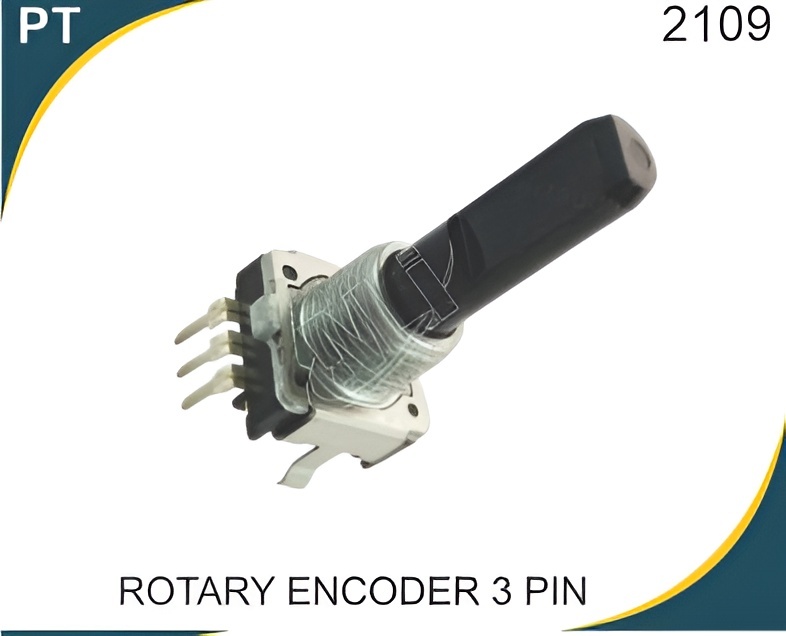

Price:
- 50
- 100
- 200
- 250
- 500
- 1000+

More Products in Potentiometer And Slides Category
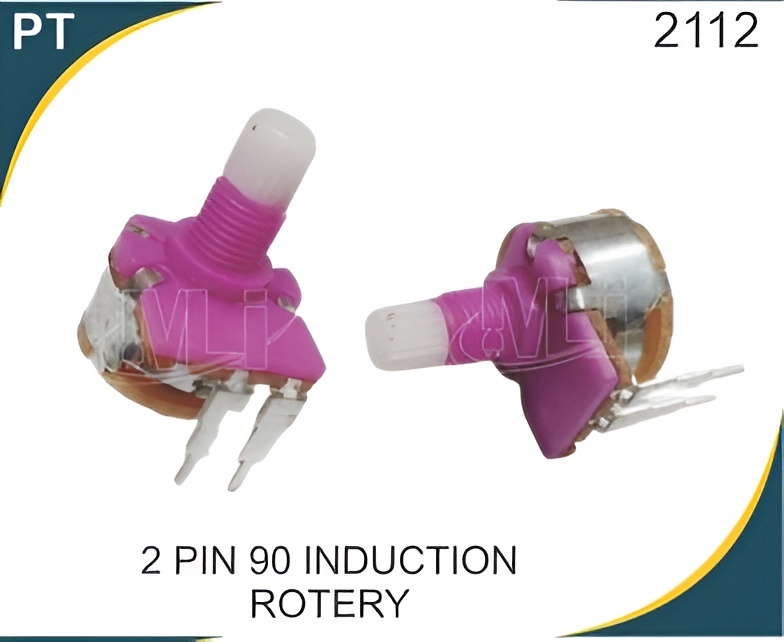
2 PIN 90 Induction rotery
Price 20 INR / Piece
Minimum Order Quantity : 1000 Pieces
Color : White
Application : Electrical Appliances, Fan, Motor Control
Weight : 150 g
Dimension (L*W*H) : 36 mm x 36 mm x 38 mm
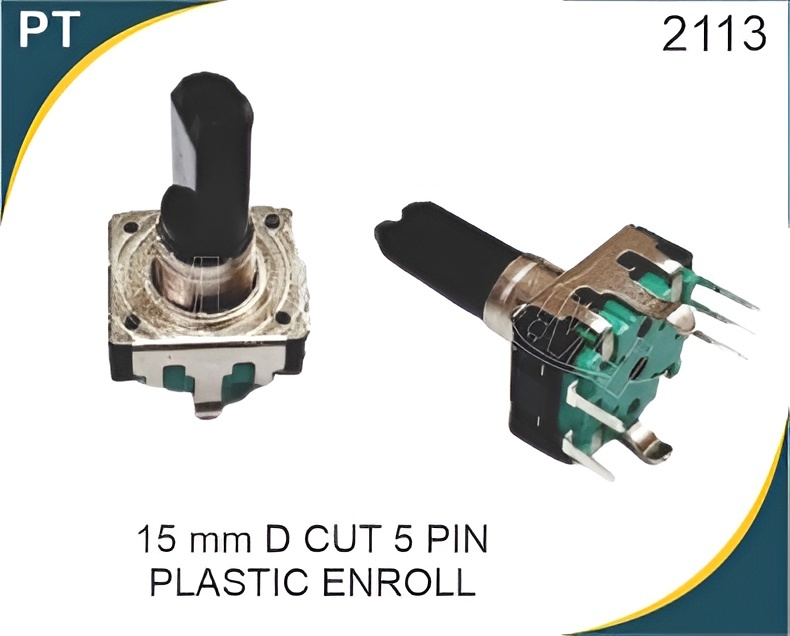
15 MM D-Cut 5 Pin Plastic Enroll
Price 22 INR / Piece
Minimum Order Quantity : 1000 Pieces
Color : White
Application : Electrical Panel Wiring, Connector circuits
Weight : 16 grams
Dimension (L*W*H) : 15mm x 8mm x 4mm
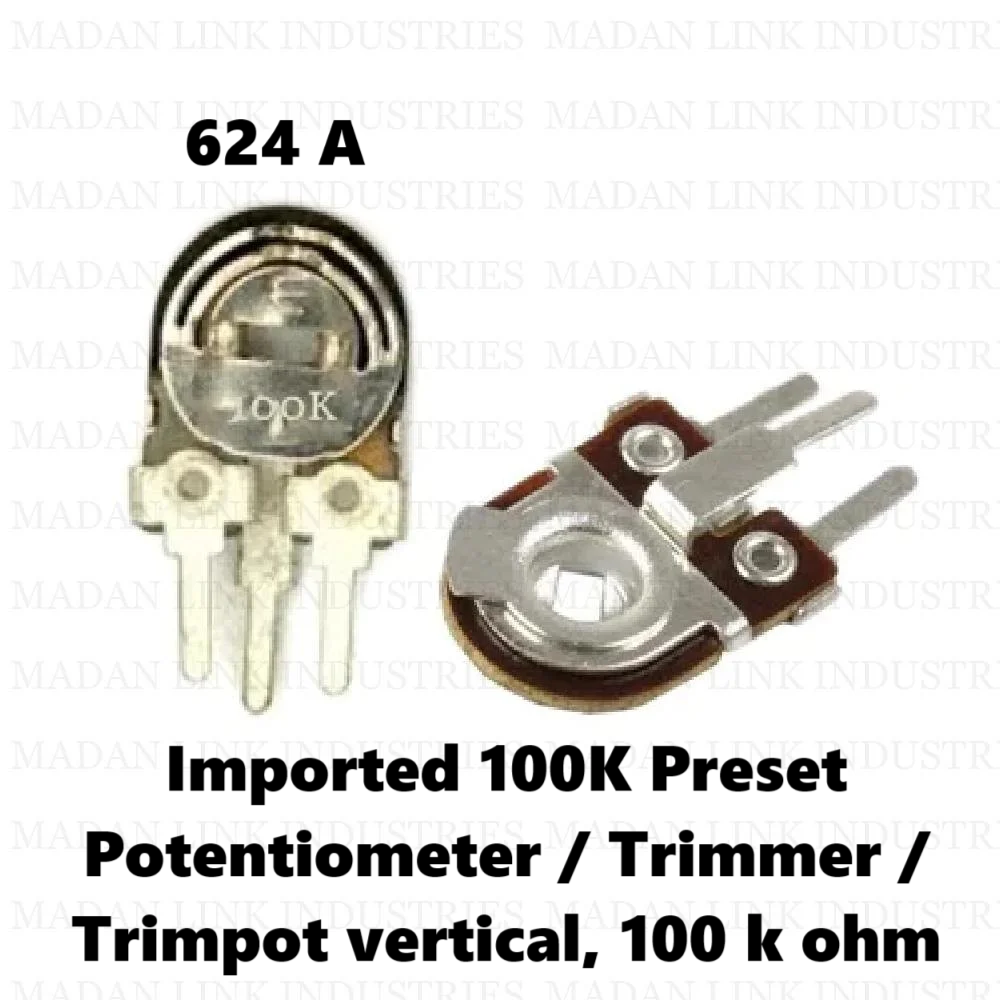
Imported 100K Preset Potentiometer / Trimmer / Trimpot vertical, 100 k ohm
Price 1.92 INR / Piece
Minimum Order Quantity : 1000 Pieces
Color : Black
Application : Audio Adjustment, Circuit Calibration
Weight : 1.5g Grams (g)
Dimension (L*W*H) : 15 mm x 7 mm x 5 mm Millimeter (mm)
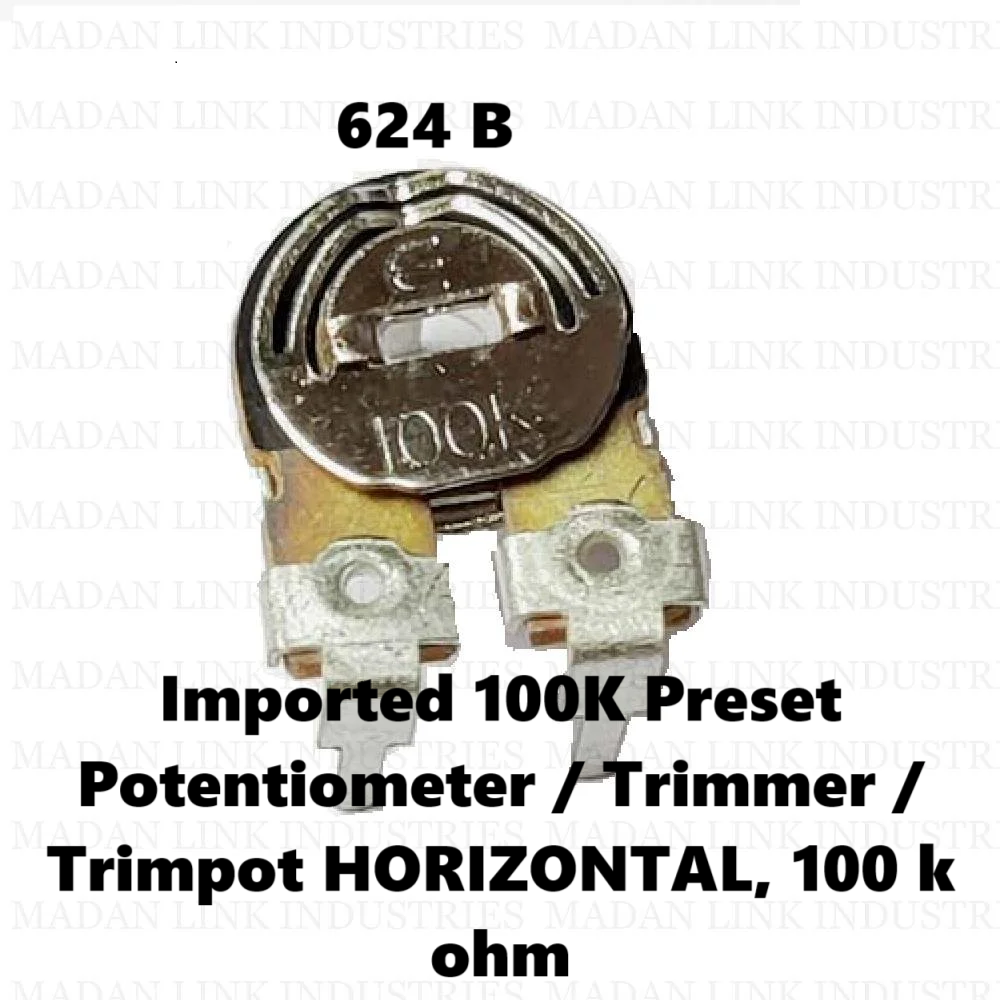
Imported 100K Preset Potentiometer / Trimmer / Trimpot HORIZONTAL, 100 k ohm
Price 1.92 INR / Piece
Minimum Order Quantity : 1000 Pieces
Color : Black
Application : General Purpose, Electronic Circuits, Calibration, Tuning
Weight : 5g Grams (g)
Dimension (L*W*H) : 22mm x 22mm x 10mm (Approximate) Millimeter (mm)

GST : 07GXHPS1420Q1ZW


 Send Inquiry
- Rocker Switch
- Round Rocker
- Long Rocker
- Big Rocker
- Monitor Switch
- Micro Switch
- Tactile Switch
- Lock-no Lock Switches
- Toggle Switches
- Ac Sockets
- Dc Sockets
- Philips Socket
- Cell Holders
- Fuse And Fuse Holder
- Alligator Clip
- Potentiometer And Slides
- Usb Connectors
- DC Fans
- Aux Sockets
- Rca Socket
- Mrs Connectors
- DC Buzzer
- Audio Couplers And Pins
- Power Switches
- XLR Connectors
- Wires And Leads
- Dip Switch
- Led Bulb And Holders
- Ohm Preset
- Berg Strip And Db Connectors
- Dust Cover
- Barrier Terminal Connector
- Metal Switch
- Nickel Strip
- Dc Motors
- Kettle Parts
- BANANA SOCKETS & PLUG
- MOULDINGS
- BARRIER & JST CONNECTORS
- THIMBLES
- MISCELLANEOUS ITEM
 Send Inquiry
 Call Me Free
Developed and Managed by Infocom Network Private Limited.

