


Call us now
07971549107

 Send Inquiry
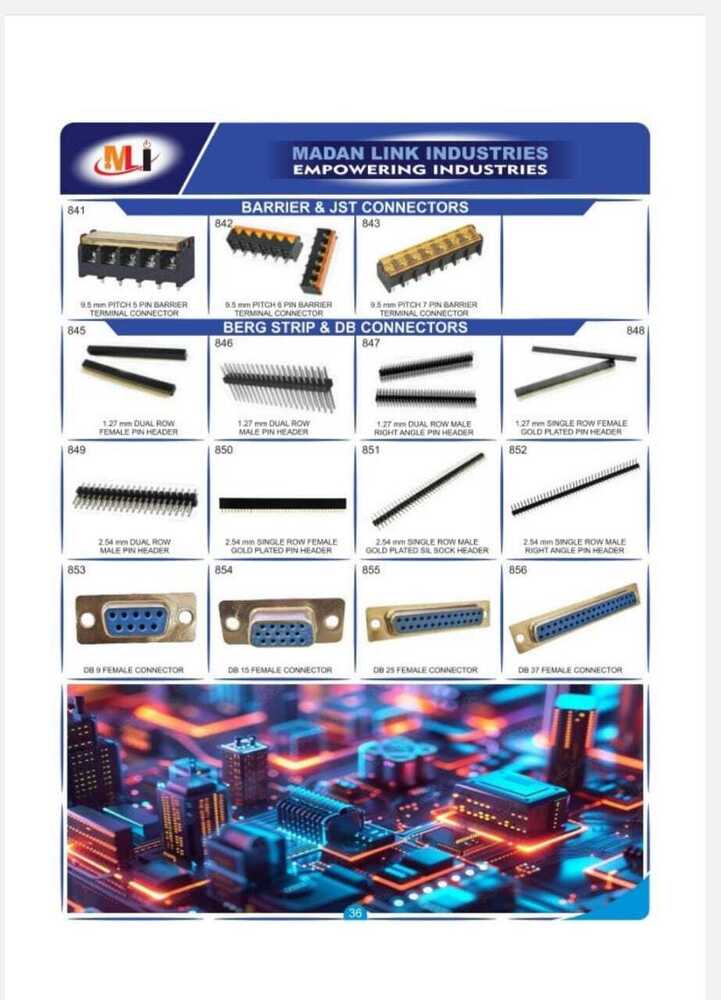
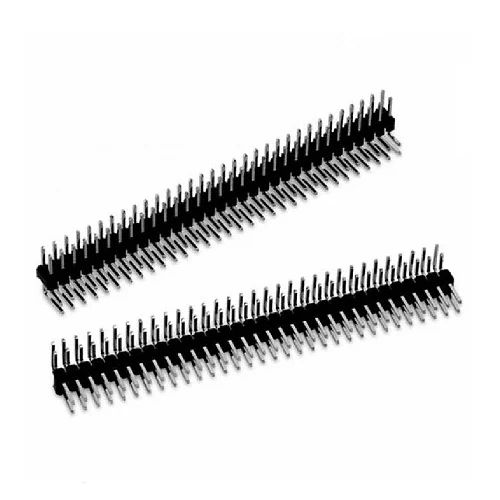
2.45MM DUAL ROW MALE PIN HEADER
Price 10 INR/ Piece
2.45MM DUAL ROW MALE PIN HEADER Specification
- Material
- Phosphor Bronze / Brass (Pins), Plastic (Housing)
- Male End Type
- Straight Male Pins
- Connector Type
- Pin Header
- Application
- PCB and electronic device connection
- Temperature
- -40°C to +105°C
- Capacity
- Variable, depends on number of pins
- Voltage Rating
- 250V AC/DC
- Connector
- Dual Row Male Pin Header
- Color
- Black (Insulator)
- Outer Diameter
- 2.45mm (Pitch)
- Insulation
- Plastic, typically PBT or Nylon
- Length
- Standard lengths as per order
- Flame Resistance Level
- UL94V-0
- Pin Plating
- Tin plated or Gold plated for high conductivity
- Pin Pitch
- 2.45mm dual row spacing
- Withstand Voltage
- 1000V AC/minute
- Mounting Type
- Through Hole (THT)
- Insulation Resistance
- 1000M at 500V DC
- Rows
- Dual Row
- Lead Style
- Straight (Vertical) or Right Angle
- Number of Positions
- Available in multiple pole options (e.g. 4, 6, 8, 10, up to 40 and beyond)
- Housing Material
- Thermoplastic (UL94V-0 rated)
- Current Rating
- 3A per pin max
- Contact Resistance
- 20m
- Operating Humidity
- 95% RH
2.45MM DUAL ROW MALE PIN HEADER Trade Information
- Minimum Order Quantity
- 1000 Pieces
- Sample Available
- Yes
- Sample Policy
- Sample costs shipping and taxes has to be paid by the buyer
- Main Domestic Market
- All India
2.45MM DUAL ROW MALE PIN HEADER About
| Size |
|
| Number Of Pins |
|
| Color |
|
| Circuit |
|
| Material |
|
| Application |
|
| brand |
|
| Connector Type |
|
| Minimum Order Quantity |
|
- Applications:
- Commonly used in computer hardware, such as connecting motherboard components.
- Suitable for wire-to-board and board-to-board connections.
- Advantages:
- Reliable electrical connection.
- Easy to use and solder onto printed circuit boards (PCBs).
- Available in various pin counts and configurations to suit different needs.
Superior Electrical Performance
Engineered for high conductivity, these pin headers feature tin or gold-plated contacts and low contact resistance ( 20m), supporting currents up to 3A per pin and reliable operation in voltages up to 250V AC/DC. This ensures stable power and signal transmission even under high-load conditions.
Robust Construction and Compliance
The housing is made from flame-retardant thermoplastic (UL94V-0), offering excellent durability and safety. Pins are crafted from phosphor bronze or brass, known for strength and conductivity. The dual-row design enhances PCB connection density without sacrificing performance.
Versatile Mounting and Customization
With options for straight (vertical) or right-angle lead styles, the headers accommodate varied PCB layouts. They are available in multiple pole counts, suitable for complex or simple interconnections. Standard black plastic insulation assures compatibility with most design requirements.
FAQs of 2.45MM DUAL ROW MALE PIN HEADER:
Q: How is the 2.45MM dual row male pin header typically mounted onto a PCB?
A: This pin header is mounted using the through-hole (THT) technology, where the pins are inserted into pre-drilled holes on the PCB and then soldered for secure electrical and mechanical connections.Q: What are the primary benefits of tin or gold plating on the pins?
A: Tin plating provides reliable conductivity and corrosion resistance at an economical cost. Gold plating offers superior conductivity, minimized contact resistance, and increased reliability, especially in applications where long-term performance and low signal loss are critical.Q: Where are dual row male pin headers most commonly used?
A: They are extensively used in electronic devices and PCBs for the connection of components, modules, or boards. These headers are found in consumer electronics, industrial control systems, and embedded solutions, where high-pin-density and secure connectivity are needed.Q: What process should be followed for proper installation?
A: Align the pin header with the PCBs drilled holes, insert it such that all pins align with their respective holes, then solder each pin on the reverse side of the board. Choose straight or right-angle styles based on your layout, and ensure the recommended soldering procedures for reliable connections.Q: When should gold-plated pin options be selected over tin-plated ones?
A: Gold-plated pins should be chosen for applications requiring higher reliability, frequent mating cycles, or environments with significant moisture or risk of oxidation. Tin is suitable for general electronic or cost-sensitive applications.Q: What environmental conditions can this pin header withstand?
A: This product operates safely in temperatures between -40C and +105C, withstanding high humidity levels up to 95% RH, making it well-suited for demanding and variable operating conditions.Q: How does the dual row configuration benefit PCB design?
A: The dual row layout increases pin density, allowing more connections in a compact space, which is ideal for modern, high-component-count PCBs where space is at a premium.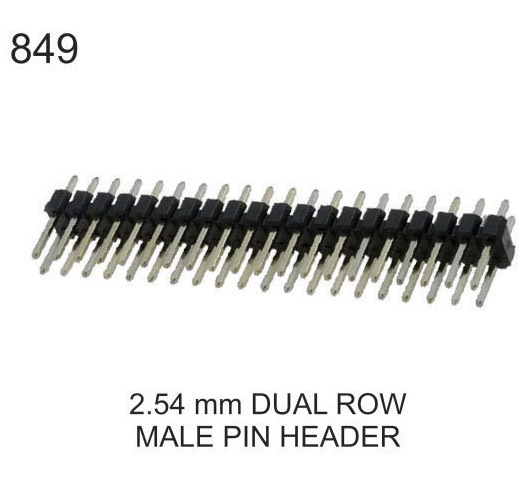


Price:
- 50
- 100
- 200
- 250
- 500
- 1000+

More Products in Berg Strip And Db Connectors Category
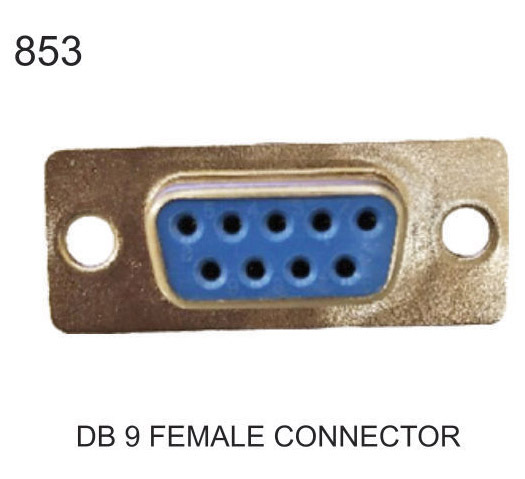
DB 9 FEMALE CONNECTOR
Price 10 INR / Piece
Minimum Order Quantity : 1000 Perches
Material : Other , Thermoplastic, Metal Shell
Color : Other, Blue (Main Body)
Application : Serial Communication, Data Transfer, Networking, Industrial Control
Connector Type : Other, DSub, Solder Type or Crimp Type
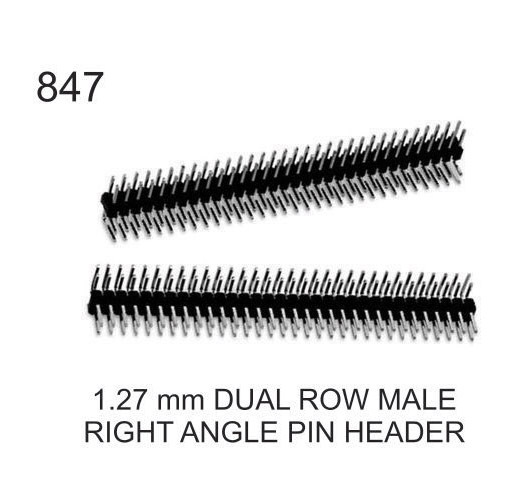
1.27MM DUAL ROW MALE RIGHT ANGLE PIN HEADER
Price 10 INR / Piece
Minimum Order Quantity : 1000 Pieces
Material : Other , Phosphor Bronze (pins), PBT or Nylon (housing)
Color : Other, Black (insulator), Gold/Nickel (pins)
Application : PCB Connections, BoardtoBoard, BoardtoWire
Connector Type : Other, Dual Row Right Angle Male Pin Header
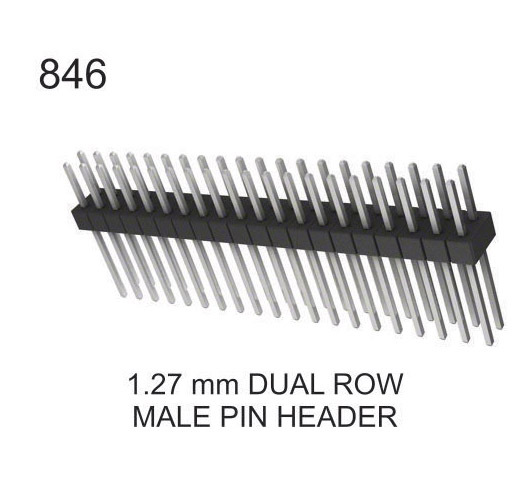
1.27MM DUAL ROW MALE PIN HEADER
Price 10 INR / Piece
Minimum Order Quantity : 100 Pieces
Material : Other , Phosphor Bronze/Brass (Pins), Thermoplastic (Housing)
Color : Other, Black (Housing), Gold/Brass (Pins)
Application : PCB Mounting, BoardtoBoard Connections, Electronic Projects
Connector Type : Other, Male Header
1.27mm Dual Row Male Right Angle Pin Header Connectors
Price 10 INR / Piece
Minimum Order Quantity : 100 Pieces
Material : Metal
Color : Black
Application : Breg Connector

GST : 07GXHPS1420Q1ZW


 Send Inquiry
- Rocker Switch
- Round Rocker
- Long Rocker
- Big Rocker
- Monitor Switch
- Micro Switch
- Tactile Switch
- Lock-no Lock Switches
- Toggle Switches
- Ac Sockets
- Dc Sockets
- Philips Socket
- Cell Holders
- Fuse And Fuse Holder
- Alligator Clip
- Potentiometer And Slides
- Usb Connectors
- DC Fans
- Aux Sockets
- Rca Socket
- Mrs Connectors
- DC Buzzer
- Audio Couplers And Pins
- Power Switches
- XLR Connectors
- Wires And Leads
- Dip Switch
- Led Bulb And Holders
- Ohm Preset
- Berg Strip And Db Connectors
- Dust Cover
- Barrier Terminal Connector
- Metal Switch
- Nickel Strip
- Dc Motors
- Kettle Parts
- BANANA SOCKETS & PLUG
- MOULDINGS
- BARRIER & JST CONNECTORS
- THIMBLES
- MISCELLANEOUS ITEM
- XT CONNECTORS
- Voltmeter & Display
 Send Inquiry
Developed and Managed by Infocom Network Private Limited.

